

Box Truck Freight
Mid-size loads often fall into a gap: too large for a cargo van, too urgent or access-constrained for a shared dry van. Box truck freight fills that gap with a dedicated vehicle that moves your cargo direct, on your schedule, to its final destination without relay stops or shared trailer space. ExpeditedFreight.com matches your load to the right equipment and keeps it moving.
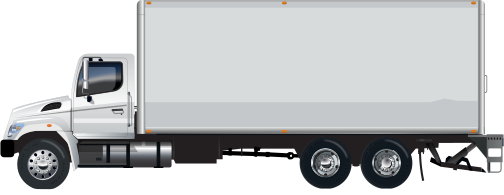





Straight Truck Equipment Matched to Your Cargo
Box Truck Freight Built for Direct, On-Time Delivery
Box truck freight is a dedicated ground shipping mode that uses a straight truck, ranging from light duty units to large 26 ft trucks, to move cargo point-to-point without shared trailer space. Unlike consolidated freight, your shipment occupies the entire vehicle and reaches its final destination without cross-dock transfers or relay stops.
This mode is especially effective when freight volume exceeds what a cargo van can handle but does not justify a full 53 ft dry van. Medium duty options cover the middle ground, offering meaningful load capacity with the maneuverability to access tighter delivery environments.
ExpeditedFreight.com deploys dedicated trucks across the country for time-critical loads, dock-compatible deliveries, and locations where a liftgate is required. Whether you need same day freight or scheduled expedited shipping, the right vehicle is matched to your cargo before dispatch.

Box Trucks
From 12-foot units suited for lighter urban loads to large straight trucks capable of hauling several thousand pounds, vehicles are matched to your load requirements. A 26 ft truck provides maximum cubic volume for floor-loaded cargo while remaining maneuverable for dock-compatible delivery environments. Of course, the right size selection depends on your specific origin, destination, and cargo profile, and a dedicated specialist will confirm the fit before the truck rolls.

Liftgate-Equipped Box Trucks
Not every delivery point has a loading dock. A liftgate allows freight to be raised and lowered mechanically at origin or destination, making box truck shipping viable for retail locations, construction sites, and residential addresses. Trucks with this additional feature eliminate the need for dock infrastructure on either end of the shipment, expanding where your cargo can be delivered without added ground support.

Expedited Freight Shipping
When a shipment cannot wait for a consolidated schedule, expedited freight via dedicated truck moves it direct. No shared space, no relay stops, no terminal handling. Box truck expedited shipping suits time-critical loads where the cost of delay exceeds the price of a dedicated vehicle. Same day freight and next-day options are available nationwide, and your account manager can confirm routing and pricing quickly so the truck rolls without unnecessary lag.
WHAT WE DO
See How Box Truck Freight Moves Your Cargo Direct
Box truck shipping combines the exclusivity of a dedicated vehicle with the flexibility to reach locations that larger dry vans cannot access. Watch how straight truck freight services handle everything from dock-compatible deliveries to liftgate-equipped drops at no-dock facilities.

Compare Box Truck, Cargo Van, and Dry Van Freight Options
KEY BENEFITS
NATIONWIDE NETWORK
Box truck freight operates across a nationwide carrier network, giving shippers access to dedicated trucks in most major markets without waiting for a local asset to become available. Whether your origin is a manufacturing facility in the Midwest or a distribution center on the East Coast, straight truck freight services coverage extends to where your cargo is located. Expedited shipping via dedicated truck is dispatched quickly, with routing optimized for direct delivery to the final stop. This network depth is what separates a reliable box truck freight carrier from a regional-only provider.
EXPLORE OUR COVERAGE



Box Truck Freight Use Cases Across Industries
- Manufacturing Dock Delivery
- Medical Equipment Hauling
- Trade Show Freight Transport
- Retail Restocking No-Dock
- Construction Site Liftgate
- Same-Day Expedited Box Truck
- Residential Final-Mile
Manufacturing Dock Delivery
Production lines cannot absorb delays caused by freight that arrives at the wrong dock height or on a consolidated schedule that does not align with shift timing. Box truck freight delivers directly to the manufacturing floor on a dedicated vehicle, dock-compatible, without the terminal handling that shared loads require. When a line-down situation demands same day freight, a dedicated truck dispatched point-to-point is often the fastest ground option available. Load capacity is matched to the part or component volume, and a liftgate is available when dock access is limited.
Medical Equipment Hauling
Medical cargo requires careful handling, exclusive use of the vehicle, and delivery to the final stop without unnecessary transfers. Box truck shipping provides a controlled environment for imaging systems, surgical tools, and diagnostic instruments that cannot share trailer space with unrelated freight. A liftgate-equipped truck allows safe lowering of heavy or fragile units at hospital loading areas, clinics, or facilities without dock infrastructure. Expedited options ensure the cargo arrives on the installation schedule, not a carrier's consolidated timeline, keeping recovery timelines and facility operations on track.

Trade Show Freight Transport
Trade show and event freight operates on fixed deadlines with no tolerance for late arrivals. Box truck cargo transport suits exhibit materials, display systems, and promotional goods that need to arrive at a convention center or venue on a precise schedule. A dedicated truck eliminates the risk of freight being delayed at a cross-dock or misrouted through a shared load network. For large exhibits, a 26 ft truck provides the hauling capacity to move an entire booth setup in a single dispatch, reducing coordination complexity and delivery risk.

Retail Restocking No-Dock
Retail locations, especially smaller storefronts and strip-center tenants, frequently lack dock infrastructure. A liftgate on a dedicated truck makes restocking deliveries viable at these sites without requiring a forklift or manual unloading from a high trailer floor. Box truck freight rates for retail restocking are often more cost-effective than dry van options when load volume does not fill a full trailer. Light duty units handle smaller restocking runs efficiently, while medium duty options scale up for larger inventory replenishment without the overhead of a full truckload.
Construction Site Liftgate
Construction sites rarely have dock access, and heavy materials need to reach ground level safely. A liftgate-equipped truck handles this without additional ground support at the site. Box truck logistics for construction cover tool deliveries, replacement parts, and materials that must arrive on a specific day to keep a project on schedule. Expedited options are available when a delayed component is holding up a crew. The truck's maneuverability also allows access to tighter job site entrances that a full dry van cannot navigate.

Same-Day Expedited Box Truck
When a shipment cannot wait, box truck expedited shipping provides a dedicated vehicle dispatched within hours. Same day freight via dedicated truck is used for production-critical components, replacement parts, and time-sensitive deliveries where consolidated schedules are not an option. The shipment moves non-stop, point-to-point, with real-time tracking from origin to final delivery. Box truck freight quotes for expedited moves are based on distance, vehicle size, and urgency. Your account manager can provide options quickly so the right truck rolls before the delay compounds.

Residential Final-Mile Delivery
Final-mile delivery to residential locations presents challenges that standard freight networks handle poorly. Most dedicated trucks are sized to navigate neighborhood streets and driveways where a 53 ft dry van cannot go. A liftgate eliminates the need for the recipient to have unloading equipment on site. Box truck delivery service for residential final-mile is commonly used for furniture, appliances, fitness equipment, and other large goods that require inside delivery or careful placement. The dedicated vehicle model means the shipment arrives on the scheduled window, not within a broad multi-stop delivery range.
BOX TRUCK FREIGHT EXPLAINED
Everything You Need to Know About Box Truck Freight Services

Box Truck Freight: Equipment and Capabilities
Box truck freight covers a broad range of shipment sizes that fall between parcel carriers and full truckload operations. A standard straight truck keeps cargo enclosed in a fixed, rigid body mounted directly to the chassis, protecting goods from weather and road debris during transit.
Payload Capacity and Truck Sizing
Payload capacity varies significantly depending on the truck configuration selected. A 12-foot box truck typically handles lighter urban deliveries, while a 26 ft truck can carry up to 10,000 pounds of freight and is commonly used for larger commercial shipments. Most box trucks fall somewhere between these two extremes, giving shippers flexibility to match the vehicle to the actual load.
Diesel Engine and Fuel Considerations
The majority of straight trucks run on a diesel engine, which delivers the torque needed for hauling heavy cargo across varied terrain. Diesel fuel costs factor into freight pricing, and carriers typically account for fuel surcharges based on current market rates. Understanding these variables helps shippers better evaluate quotes and avoid surprises at invoicing.
Medium duty truck configurations are the most common choice for regional box truck freight lanes. These vehicles are capable of navigating urban loading zones, suburban distribution centers, and industrial parks without the access restrictions that larger combination trucks face.
When evaluating equipment, shippers should determine whether their freight requires a liftgate, interior load bars, or other additional features that affect both pricing and delivery execution. Matching the right straight truck to the shipment from the start reduces delays and prevents damage claims.
Liftgate Service for Box Truck Deliveries
Liftgate service is one of the most frequently requested additional features on box truck freight shipments. When a delivery location lacks a loading dock or a forklift on site, a lift gate allows the driver to lower freight from the truck bed to ground level without external equipment.
Lift Gate Mechanics and Weight Limits
A lift gate is a hydraulic platform mounted to the rear of the truck that raises and lowers cargo between the truck floor and the ground. Weight limits on these platforms typically range from 1,500 to 2,500 pounds depending on the truck and manufacturer specifications. Shippers should always confirm the lift gate capacity against their freight weight before booking to avoid delivery failures.
Dock Height vs. Liftgate Delivery
Dock height deliveries work well for commercial receivers with loading docks that align with the truck floor, eliminating the need for a lift gate entirely. However, many final destination locations, including retail storefronts, medical offices, and residential-adjacent facilities, are not dock equipped. In these cases, liftgate service is not optional but operationally necessary.
Scheduling a box truck with liftgate service requires specifying this at the time of booking, not as an afterthought. Carriers that arrive at a delivery location without the correct equipment may be turned away, resulting in redelivery fees and delays that affect the entire supply chain.
For expedited freight shipments where timing is critical, confirming liftgate availability in advance is especially important. Same day freight runs leave little room for equipment substitutions once a truck is dispatched. Communicating delivery requirements clearly at the point of order entry keeps the shipment on track from pickup to final destination.

Expedited Shipping with Straight Trucks
Expedited freight shipping via box truck is a practical solution when standard carrier networks cannot meet the required delivery window. Unlike LTL freight, which consolidates multiple shipments and adds transit days, a dedicated straight truck moves directly from pickup to the final destination without intermediate stops.
Same Day Freight and Time-Sensitive Loads
Same day freight service using a box truck is common in manufacturing, healthcare, and automotive supply chains where production lines cannot tolerate delays. A large straight truck dispatched within hours of a freight emergency can cover regional lanes of 300 to 500 miles within a single business day. The key advantage is exclusivity: the truck and its cargo capacity are dedicated entirely to one shipment.
Expedited Freight vs. Standard Delivery Truck Service
Standard delivery truck service operates on fixed schedules and predetermined routes, which creates predictability but limits responsiveness. Expedited shipping bypasses those constraints by dispatching on demand, often within 90 minutes of booking confirmation. This makes it the preferred option when inventory shortages, equipment failures, or missed inbound shipments create urgent freight needs.
Box truck freight in an expedited context also offers better load security than shared transportation. Because the cargo does not transfer between terminals or get handled by multiple crews, damage rates on expedited straight truck shipments tend to be lower than on standard consolidated freight.
Carriers specializing in expedited freight maintain fleets of equipped straight trucks ready for immediate dispatch. Shippers benefit from working with providers that have regional coverage and can confirm truck availability, driver status, and estimated arrival times in real time. Transparency throughout the move is as important as speed.

Hot Shot Freight Vs. Box Truck Freight
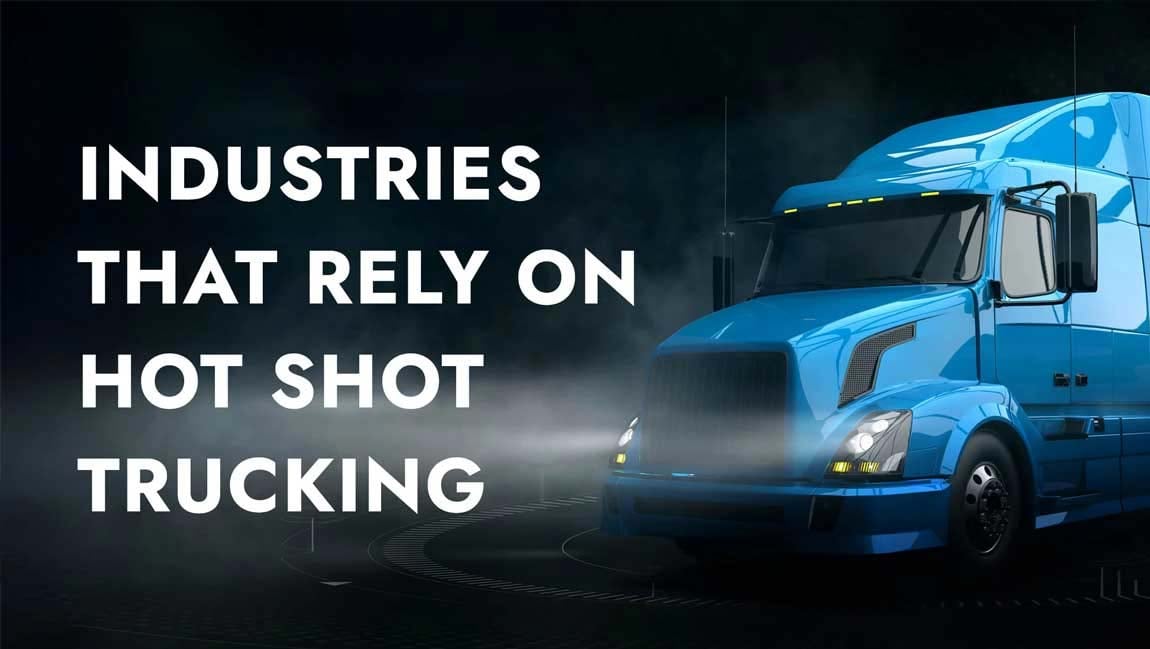
Hot shot trucking and box truck freight both serve time-sensitive shipments, but they differ significantly in vehicle type, payload capacity, and the freight profiles they handle best. Understanding these differences helps shippers select the right service without overpaying for capacity they do not need.
Hot Shot Delivery for Smaller Urgent Loads
Hot shot delivery typically uses light duty box trucks, cargo vans, or flatbed configurations to move smaller urgent loads that do not justify a full straight truck. These vehicles are faster to dispatch and more maneuverable in tight urban environments. Hot shot freight is common in oil and gas, construction, and industrial maintenance sectors where a single critical part must reach a job site immediately.
When Box Truck Freight Is the Better Choice
When the shipment volume grows beyond what a cargo van or light duty vehicle can handle, a medium duty or large straight truck becomes the appropriate choice. Box truck freight offers enclosed protection, greater hauling capacity, and the ability to accommodate palletized loads that hot shot vehicles cannot safely carry. For shipments requiring dock height access or a lift gate, a properly equipped straight truck is the only viable option.
Cube vans occupy a middle ground between sprinter vans and full straight trucks, offering moderate payload capacity in a compact footprint. They are well suited for urban routes where a 26 ft truck would face access restrictions but where a cargo van lacks sufficient space.
Shippers evaluating hot shot trucking against box truck freight should determine the actual dimensions and weight of their load before requesting quotes. Selecting a vehicle that is too small risks a failed pickup, while selecting one that is too large adds unnecessary cost. Accurate freight data at the point of booking leads to better equipment matching and fewer service failures.

Dock Delivery Requirements for Straight Trucks
Dock delivery is the standard receiving method at warehouses, distribution centers, and large commercial facilities. A straight truck pulls into a dock bay, aligns the truck floor with the dock height, and freight is transferred using pallet jacks or forklifts without any need for a lift gate or ramp.
CDL Requirements and Driver Qualifications
Drivers operating a large straight truck or 26 ft truck in commercial freight lanes are typically required to hold a CDL depending on the gross vehicle weight rating. Shippers working with reputable carriers should confirm that drivers are properly licensed and that the equipment meets federal and state commercial vehicle regulations. Compliance gaps can result in delays, fines, or impound situations that disrupt delivery timelines.
Navigating Facility Access for Box Truck Freight
Not every receiving location is equipped for dock delivery. Industrial parks, manufacturing campuses, and large distribution centers are typically dock equipped, but smaller commercial locations may have incidental or no dock access at all. Confirming dock availability, truck court dimensions, and any facility restrictions before dispatch prevents costly redelivery attempts.
Some facilities located in dense urban areas or older industrial zones have dock height inconsistencies that require drivers to use dock levelers or portable plates. Carriers with experienced drivers familiar with these conditions can navigate these challenges more efficiently than those without regional knowledge.
For shippers managing regular box truck freight lanes, building a checklist of delivery location requirements, including dock access, liftgate needs, appointment windows, and equipment restrictions, creates a repeatable process that reduces exceptions. Consistent communication between the shipper, carrier, and receiving facility is the single most effective way to ensure freight arrives on time and without damage.
Expedited Trucking Excellence: Explore Our Resource and Blog Section
ExpeditedFreight.com is a leader in the freight industry. Our blog and resource section offers information and resources to improve your logistics strategy.


From critical shipments to ongoing support, see why businesses continue to choose ExpeditedFreight.com