
Sprinter Vans
For urgent parts, samples, and small palletized loads, a dedicated Sprinter van gets your shipment where it needs to go faster.
EXPEDITED DELIVERY SOLUTIONS
What are Sprinter Vans?
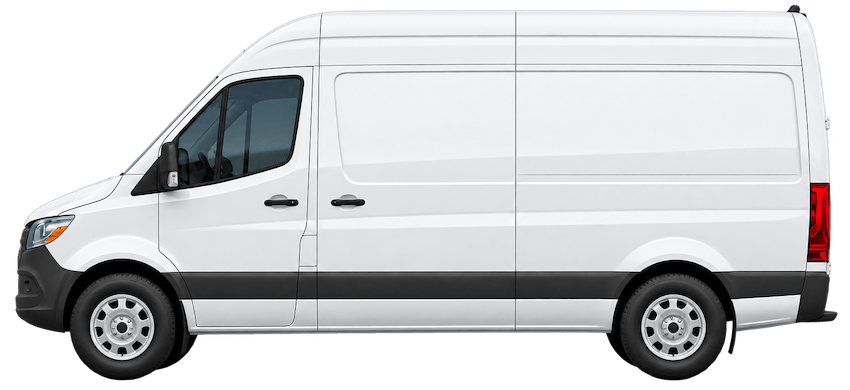
The “Sprinter” name is officially applied to a family of Mercedes-Benz vehicles, although the Ram ProMaster and Ford Transit are very similar and are used for the same kind of express delivery service. Compact and easy to drive in crowded streets and confined spaces, these vans are ideal for making express deliveries in congested metropolitan areas. Plus, they offer high payloads – up to 3,000 lbs – and space for as many as three standard pallets.
Sprinter vans are intended for door-to-door-delivery. Cargo access is through the hinged rear doors, although some also have sliding side doors. The cargo floor is below loading dock level, so they are often used for same day and overnight expedited delivery of packages that can be hand carried in and out of offices, laboratories, and industrial premises.
Depending on the model and configuration, cargo areas are typically around 12 to 14 feet long, with enough interior height to stand upright. Payload capacity usually reaches into the low thousands of pounds, and many vans can accommodate one to three standard pallets. Exact dimensions and weight limits vary by vehicle, so shipments approaching those limits should always be matched against the specifications of the van being dispatched.
That flexibility fills an important gap in freight transportation. A courier car cannot handle palletized or oversized cargo, while a box truck may be more capacity—and cost—than the shipment requires. Sprinter vans sit comfortably between the two, handling anything from a few hundred pounds of urgent parts or samples to several thousand pounds of palletized, crated, or boxed freight.
ExpeditedFreight.com coordinates dedicated Sprinter van capacity nationwide, meaning the vehicle is assigned to one shipment. Once loaded, it heads directly to the consignee rather than stopping for other freight or moving through a terminal network. For urgent freight, that can save hours—or even days—compared with shared-freight services.
Request a Quote Now
Add your shipment details below, and one of our professional expeditors will contact you within minutes. For immediate assistance on an urgent quote, call (800) 704-7145 with these details handy.
Sprinter vans are highly regarded for their flexibility and maneuverability.

Cargo capacity 3-4 pallets, maximum payload 3,000 lbs.

Easily navigate through urban areas and steer clear of traffic congestion.

Designed for easy manual loading and unloading.
Sprinter Van Cargo Capacity
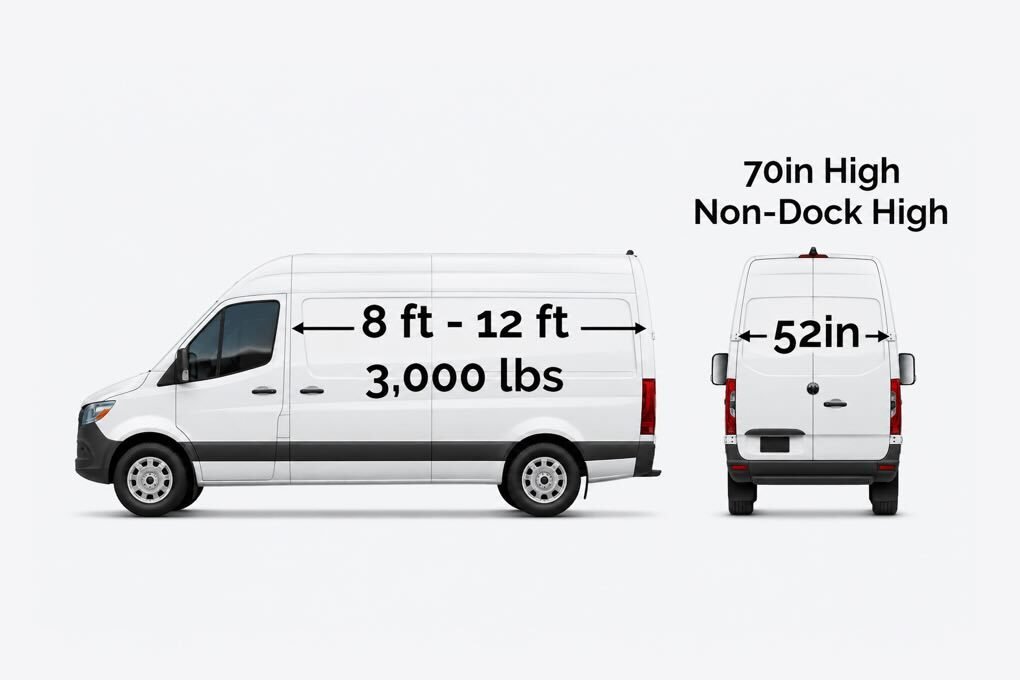
Though typically used for same day shipping of smaller packages, cartons and totes, Sprinter vans can carry items up to 12’ long and measuring as big as 52” x 70”. That’s enough for three regular 48”x40” pallets.
Maximum payload is around 3,000 lbs, although some models of sprinter van can handle more. Plenty of tiedown points and lots of strap options mean cargo is always secured safely.
Whether it’s a time-sensitive shipment across town or a critical delivery to a remote area, Sprinter vans are well-suited to meet the demands of fast-paced logistics. Their reliable performance, coupled with efficient fuel consumption, ensures that businesses can rely on them for quick turnarounds without compromising on safety or cargo security.
TYPES OF CARGO
Sprinters are intended for expedited freight services:
This service is ideal for priority items like test equipment, display materials, small tools, and limited quantities of finished products, where delays or late delivery can incur steep costs.
Sprinter vans are often used for urgent samples or, in extreme cases, to deliver small quantities of materials or components to keep production running while a larger shipment is being prepared.
Sprinter van service is not suitable for large quantities, bulky or heavy items, or perishables requiring refrigeration over long distances.
ExpeditedFreight.com: Rapid Response for Small, Time-Critical Shipments.
KEY BENEFITS
The speed of an urgent van shipment is decided largely before the wheels turn — by how long it takes to get a vehicle to the pickup.
ExpeditedFreight.com draws on carrier capacity across the country to find a qualified van already positioned near the origin, which is often the difference between loading within hours and loading the next morning. Because the network is deep in this equipment class, it also holds up during disruptions, when weather, seasonal demand, or a regional surge tightens capacity in a particular market.
EXPLORE OUR COVERAGEDecisions on emergency freight arrive at inconvenient hours and need someone who already holds the context.
One expeditor owns each shipment as your single point of contact (SPOC) — locating the van, arranging loading, planning the route against driver hours, watching progress, and flagging changes — from the first call through delivery confirmation. Nothing gets re-explained to a queue, and no update waits on a shift handoff.
MEET THE TEAM
Small urgent loads carry their own judgment calls.
Interior height and door opening determine whether a crate clears; a pallet that fits by footprint can still be too tall for the rear opening. Payload ratings are modest, so dense freight — castings, tooling, batteries — reaches the weight limit long before the space fills. Fragile or vibration-sensitive freight needs securement rather than simply loading. Site conditions decide handling: a van with no liftgate depends on a dock, a forklift, or hands at the destination. Our expeditors work through dimensions, per-piece weight, packaging, and access at both ends before dispatch, and escalate to a box truck when the freight has genuinely outgrown a van rather than forcing a fit.
VIEW ALL SERVICES
Freight moving on an urgent van is usually holding something up, so the people waiting need position rather than reassurance.
Vans report location in real time, and the expeditor on the shipment follows that feed actively rather than checking it when asked. Vehicles are monitored throughout the run, updates go out as the van advances, and disruptions — a closure ahead, deteriorating weather, a delayed receiving window — are raised early enough to reroute, adjust timing, or notify the consignee before the delay becomes a surprise.
LEARN MORERange and Routes
Sprinter vans are designed for the congested streets and confined parking lots of cities and towns, but they’re equally at home on interstate highways and state routes. Whether you’re rushing samples to a client a few blocks away or looking for cross-border expedited delivery, our Sprinter Van Service goes the distance.
Two advantages of sprinter vans over box trucks and semi-tractors are that they’re lower and lighter. This means they can take the direct routes and shortcuts these bigger vehicles are excluded from, and that can save vital minutes on a rush delivery.
So, range and routes? Generally, shorter range and urban journeys, but just as good for inter-state, cross-country, and even international expedited delivery.
End to End Solutions
Sprinter vans offer a cost-effective solution for businesses managing smaller freight loads. Their superior fuel economy compared to larger trucks helps minimize transportation costs while maintaining reliable performance. Ideal for time-sensitive deliveries like medical equipment, high-value electronics, or perishables, Sprinter vans combine speed with careful cargo handling.
One of the key advantages of Sprinter vans is their dedicated service. Unlike traditional freight carriers that consolidate multiple shipments, Sprinter vans typically carry a single load per trip. This direct delivery approach reduces the risk of delays, minimizes handling, and lowers the chance of damage or loss.
Wondering if a Sprinter van is the right fit for your hot shot shipping needs? Our experienced logistics team is ready to provide guidance — or you can use the information here to make an informed decision yourself.
KEY VEHICLE SPECIFICATIONS
Sprinter van manufacturers
Ram, Ford and Mercedes-Benz. All are known for their reliability and safety.
Maximum internal length
Assume 12’, although some models are longer.
Maximum internal height
70” (Models are available with higher roofs.)
Payload
Nominally 3,000 lbs, RWD Transits and Sprinters may be able to handle more.
Loading
No loading dock required: Pick up and drop off at the front door if necessary.
Range
300 – 400 miles between refueling stops
Customer Reviews
551 Reviews
Trusted by Businesses Nationwide
See customer feedback about our service, communication, and expedited shipping support.
G Rated by customers on Google
Your Time-Sensitive Cargo Needs a Dedicated Freight Team
Sprinter Van Advantages
Capabilities
Sprinter vans stand out for their nimbleness and flexibility. They glide through city streets effortlessly, dodging the logistical snags that plague bigger freight options, and can slip into tight parking spots trucks can’t touch. Without the need for loading docks, they zip from pickup to drop-off faster than nearly any other transport method.
On top of that, Sprinter vans are incredibly adaptable, serving as a perfect fit for all sorts of industries. Whether rigged for rapid deliveries, mobile workspaces, or passenger shuttling, they provide a customizable foundation that businesses can shape to their unique demands. Plus, with better fuel economy and lower running costs than larger trucks, they’re a smart, cost-saving pick for companies aiming to streamline their logistics.
Cargo Capacity
Sprinter vans have a cargo limit of about three to four pallets, so they’re not built for hauling massive loads of production components. Instead, they’re the go-to choice when you need a small batch, a specialized tool, a critical part, or urgent equipment delivered to a site in record time.
Thanks to their compact size and swiftness, Sprinter vans are a staple for time-critical shipments in fields like healthcare, manufacturing, and auto repair. They shine when moving high-value, delicate, or perishable items that demand gentle handling and lightning-fast delivery.
Reliability
Our Sprinter van service caters to clients from diverse sectors, including oil and gas, manufacturing, retail, and chemical processing. Whenever there’s a demand for swift, dependable, and consistent delivery, our Sprinter vans rise to the occasion. We’ve earned a reputation as a reliable ally for companies that prioritize top-tier performance in their supply chain.
With a keen awareness of the time-sensitivity and accuracy these industries require, we approach every delivery with meticulous attention and efficiency. Operating 24/7, our Sprinter van service delivers accelerated transportation solutions, enabling businesses to sidestep expensive delays and keep their operations running smoothly.

Speed
A key consideration in selecting Sprinter van service is that DOT regulations for driver hours differ from those governing semi-trucks. This allows for fewer mandated breaks, significantly boosting delivery speed. When time is critical, a Sprinter van can transport goods to their destination faster than a truck. For companies that depend on timely and reliable freight solutions, Sprinter vans offer a distinct advantage.
For those looking to optimize speed, cost, and dependability, Sprinter van service emerges as an exceptional choice, guaranteeing that time-sensitive shipments arrive quickly and safely.
Tracking Technology
We understand the value of getting regular status updates when a delivery is urgent and people are waiting. That’s why we use sprinter vans equipped with advanced tracking technology. This gives us real-time updates, which lets us re-route drivers around weather hazards or traffic congestion to ensure on-time delivery. It also means we can tell customers where their priority delivery is at every moment of its journey.
Loading and Unloading
Many Sprinter vans feature a large sliding side door alongside rear doors, simplifying loading and unloading. These vans are easily loaded with a forklift, though the floor sits lower than a typical loading dock height.
This lower floor level enhances the Sprinter’s accessibility for manual loading and unloading, often eliminating the need for extra tools like dock plates or ramps.
With generous rear and side entryways, Sprinter vans accommodate efficient cargo management—whether handled by forklift, pallet jack, or hand. This adaptability is a major advantage for businesses operating in areas without standard docks, such as construction sites, retail outlets, or urban drop-off locations.

Industries That Rely on Sprinter Vans
Oil & Gas
Field operations and processing facilities lose money by the hour when instrumentation or control hardware fails. Expedited van service moves pressure and flow sensors, seal kits, choke components, calibration equipment, and downhole tool parts from vendors and service centers out to sites and supply yards, where enclosed transport keeps precision components clean across dusty lease roads.

Technology
Data center and network operations keep spares thin and lead times short. Dedicated vans carry optical transceivers, line cards, memory and drive modules, replacement power supplies, and pre-configured appliances between depots, integrators, and facilities. Small, high-value hardware benefits from exclusive use, since fewer transfers mean fewer opportunities for loss or mishandling.

Automotive
Sequenced assembly leaves no slack, and a line stoppage triggers transportation decisions within minutes. Sprinter van freight moves injectors, control modules, sensors, weld tips, and first-article samples from suppliers directly to plants and sequencing centers. A single rack or pallet fits a van comfortably, and direct routing avoids the terminal delays that would defeat the purpose.

Construction
Project delays often trace back to a small item rather than a large one. Expedited vans deliver survey and testing instruments, specialty anchors, adhesives and sealants, and replacement hydraulic hoses to job sites and equipment yards. The vehicle's size is an asset on partially built access roads and urban sites with no room to stage a truck.

Manufacturing
Plants running lean discover shortages at the worst possible moment. Dedicated van service moves bearings and seals, PLC and drive modules, cutting tools, and inspection samples between vendors and production facilities. For a shortage measured in a handful of parts, a van is the fastest and most proportionate response — no waiting for a trailer to fill, no paying for capacity the freight will not use.

Aerospace & Defense
Aircraft on ground situations set the pace for much of this sector's urgent freight. Sprinter vans transport rotable spares, actuators, avionics units, cabin and seat components, sealants and consumables, and calibration standards between MRO facilities, distribution centers, and airfields. Exclusive use supports the documentation and custody requirements that accompany controlled parts.
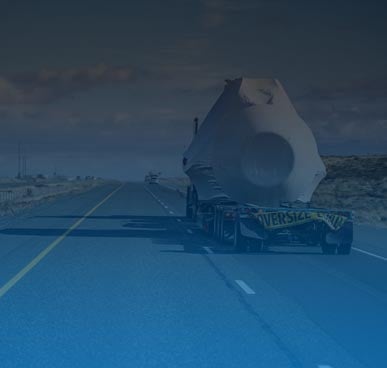
Machinery
Equipment service organizations measure their reputation in repair turnaround. Expedited vans carry encoders, servo drives, spindle cartridges, hydraulic valves, belts, and crated subassemblies from parts depots to customer plants and repair shops. Getting the right component to a technician who is already on site converts a multi-day return visit into a same-visit repair.
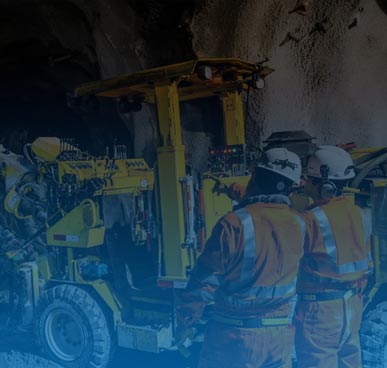
Mining
Distance is the defining problem for mine supply. Dedicated vans rush relay and control panels, sensors, filtration cartridges, and small wear components to operations far from distribution centers, and carry core samples back to laboratories on schedules that testing programs depend on.

Telecommunications
Network restoration runs on small hardware delivered quickly. Sprinter van freight moves transceivers, splice enclosures, rectifier modules, test equipment, and replacement radios to central offices and cell sites. Because a technician usually reaches the site before the hardware does, van service is what turns an arrival into a repair.
Ground Transportation and Expedited Trucking Services
Expedited Freight Excellence: Explore Our Resource and Blog Section
ExpeditedFreight.com is a leader in the freight and logistics industry. Our blog and resource section offers information and resources to improve your shipping strategy.
The Right Capacity Is Key to Every Urgent Shipment
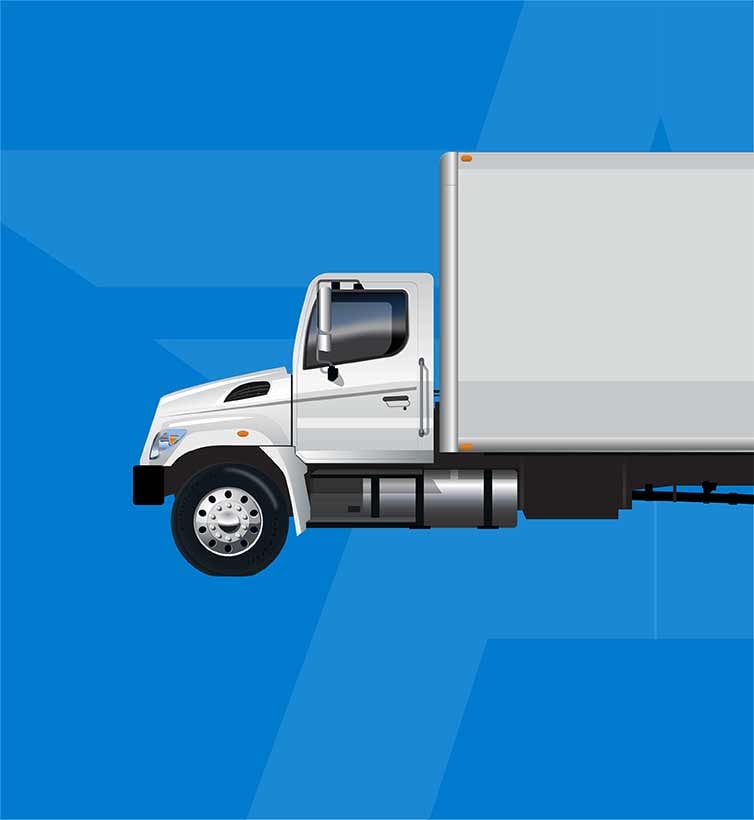
Your urgent shipment will be the only freight in the sprinter van, box truck, straight truck, hot shot truck, 53’ dry van, or full flatbed to minimize damage and ensure the shipment goes direct from pickup to delivery.
SPRINTER VAN
Expedited Sprinter vans have the capacity to meet your local, regional, or long-distance ground shipping needs. Measuring 8-12’ x 52” x 70", these carefully-selected vans have the capacity to carry loads up to 3,000 lbs.
#1
5/5
50000
24/7
BOX TRUCK
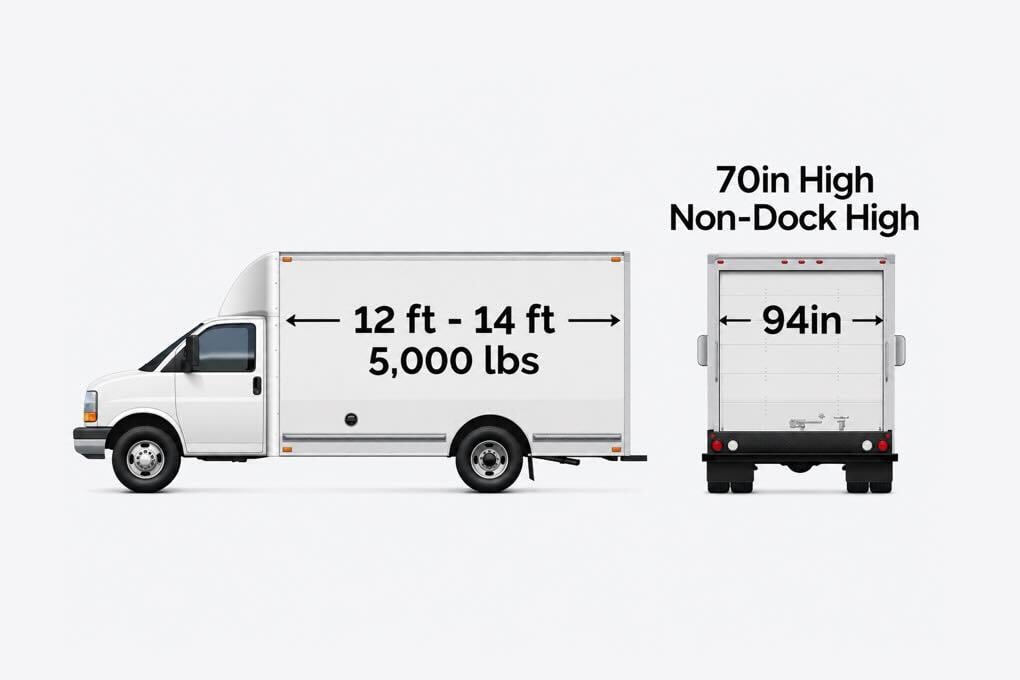
We pride ourselves in working with trusted partners that offer carefully-vetted box trucks, from lift-gate service to varying sizes that accommodate smaller loads. Box trucks, or small straight trucks, measure 12-16’ x 94” x 70” and have the capacity to carry up to 5,000 pounds.
#1
5/5
50000
24/7
STRAIGHT TRUCK
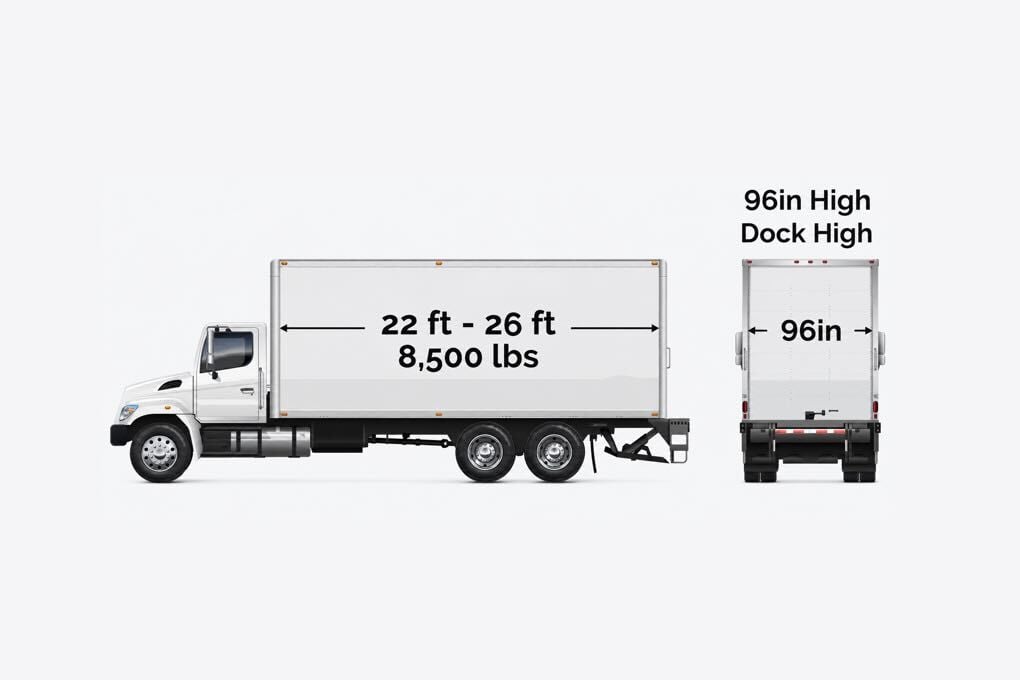
Measuring 22-26’ x 96” x 96”, straight trucks can carry loads up to 9,000 pounds. Large straight truck services offer focused logistics, professional drivers, and deeply-experienced expeditors to get your delivery where it needs to go.
#1
5/5
50000
24/7
53' DRY VAN
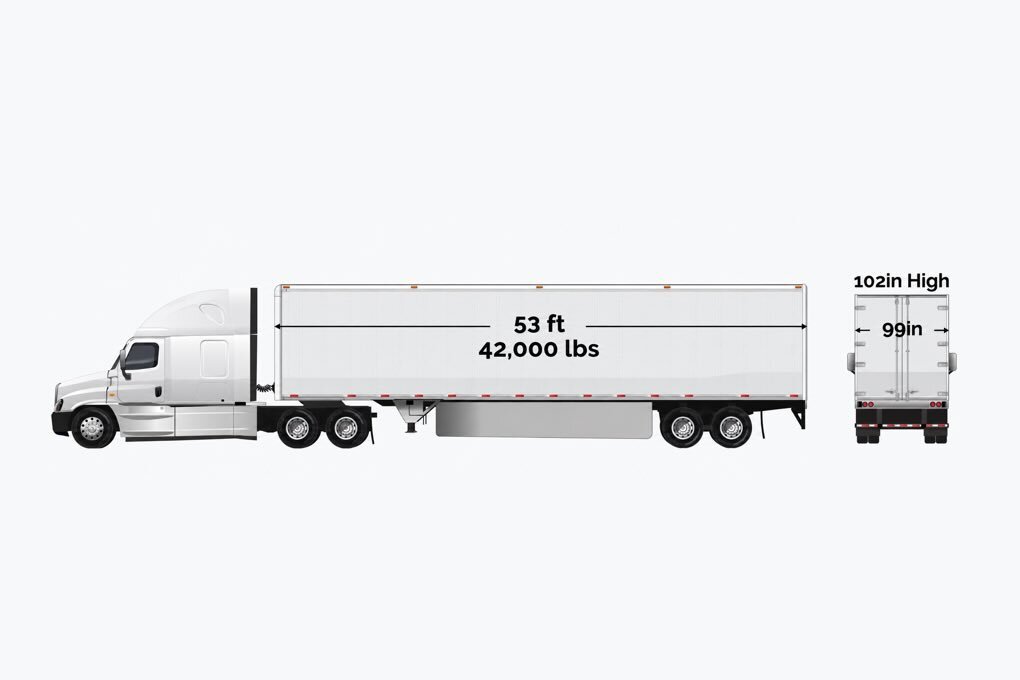
Our premium network of 53-ft dry vans can carry loads up to 42,000 pounds. Measuring 53’ x 99” x 102”, these carefully-vetted vehicles will ensure your time-sensitive freight arrives at its destination safely.
#1
5/5
50000
24/7
FULL FLATBED
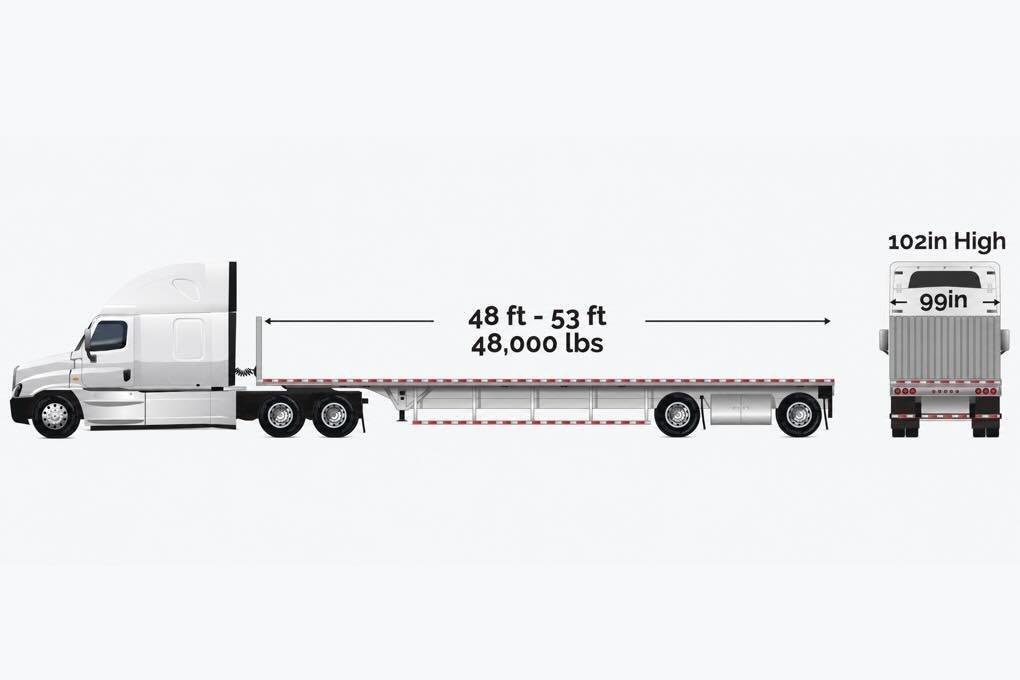
Full flatbed vehicles can accommodate wide or mega-size loads, such as specialized equipment machinery of all weights and sizes. Measuring 48-53’ x 102” x 102”, full flat bed vehicles can carry freight of up to 48,000 pounds.
#1
5/5
50000
24/7
HOT SHOT TRUCK
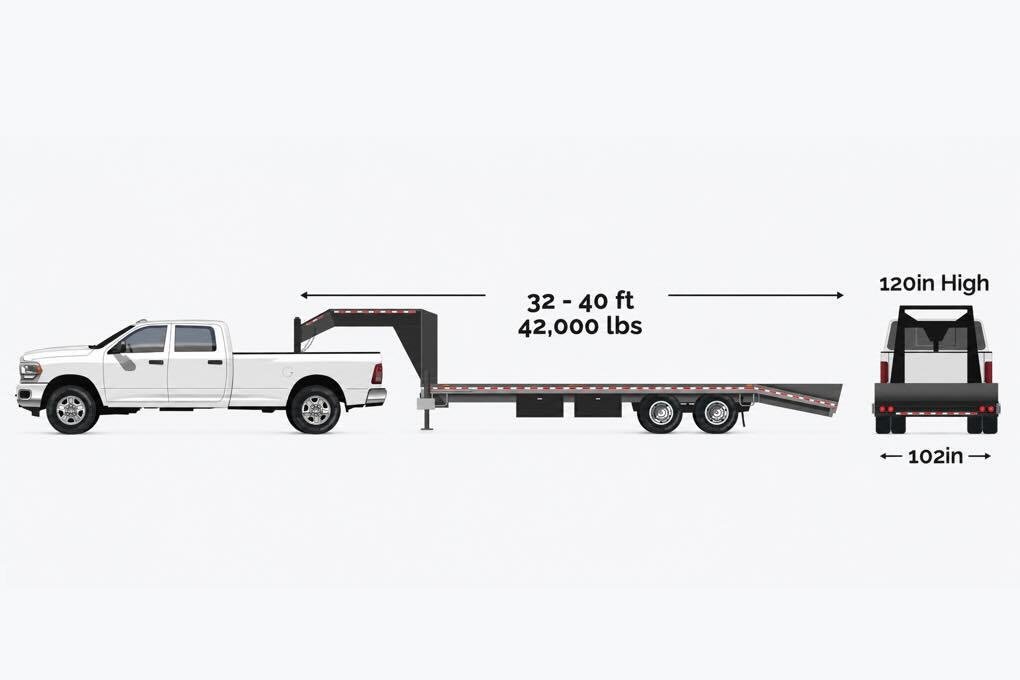
We'll happily arrange for your freight to be transported via hot shot trucking services. We've proudly partnered with hot shot trucking providers across North America to give you access to carefully-vetted ground delivery vehicles for your time-critical freight.
#1
5/5
50000
24/7
Frequently Asked Questions
What is a Sprinter van?
A Sprinter van is a full-size commercial cargo van used to carry freight too large for a car or courier vehicle and too small to justify a truck. The name comes from the Mercedes-Benz Sprinter, but in freight usage it has become a generic term covering comparable high-roof cargo vans such as the Ford Transit and Ram ProMaster.
The defining features are an enclosed, tall cargo compartment and a load floor set low to the ground. That combination allows a van to carry pallets, crates, and oversized cartons while remaining easy to drive, park, and unload without dock infrastructure. Interior dimensions and payload ratings vary between manufacturers and wheelbase configurations, so the specifications of the assigned vehicle should govern load planning.
What is expedited Sprinter van service?
Expedited Sprinter van service is time-critical freight transportation using a cargo van assigned to a single customer's shipment. The van is dispatched as soon as one can be positioned at the pickup, loaded, and driven directly to the destination without terminal stops or additional freight aboard.
The service is built around a deadline rather than around efficiency across many customers. That means the route serves one origin and one destination, transit is limited mainly by driving distance and federal hours-of-service rules, and the shipment is handled only at loading and unloading. It is most commonly used for line-down parts, emergency repairs, samples with fixed deadlines, and recovery shipments after a supply failure.
How much freight can a Sprinter van carry?
Payload for vans in this class generally falls in the low thousands of pounds, but the figure varies considerably with manufacturer, wheelbase, roof height, and how the vehicle is equipped. A published capacity for one model line does not transfer to another, and installed equipment such as shelving reduces what remains available for cargo.
Volume is usually the binding constraint before weight. Bulky, lightweight freight fills a van's cargo area well short of its payload rating, while dense items such as machined parts, tooling, or batteries hit the weight ceiling with the van looking half empty. Providing actual weights and dimensions when booking allows the right vehicle to be assigned rather than discovered at the dock.
How many pallets fit in a Sprinter van?
Most Sprinter-class vans accommodate a small number of standard 48-by-40-inch pallets — commonly two to four depending on the wheelbase, interior width, and how the pallets are oriented. Some configurations are tight enough that pallet width becomes the limiting factor, particularly on vans with interior wheel-well intrusions.
Height is the other constraint and frequently the one that causes problems. A pallet that fits the floor plan may still exceed the rear door opening once stacked and wrapped. Stack height, footprint, and weight should all be confirmed at booking. Where a load sits at the edge of van capacity, stepping up to a box truck is usually faster than attempting a partial fit and arranging a second run.
What is cargo van freight?
Cargo van freight refers to commercial shipments moved in enclosed vans rather than trucks or trailers. It typically covers loads from roughly a hundred pounds up to a van's payload limit: individual pallets, crated equipment, parts orders, samples, and consolidated cartons.
The category sits between parcel service and truckload transportation. Parcel networks handle small packages efficiently but route them through sorting hubs and impose size and weight limits. Truckload service handles far more freight but costs more and requires more infrastructure at each end. Cargo van freight fills the middle, and because the vehicle is dedicated to one shipment, it delivers directly with no consolidation, sorting, or intermediate handling.
When should I use a Sprinter van instead of a box truck?
Choose a van when the freight fits within its space and weight limits and when speed or access favors a smaller vehicle. One to three pallets, loads in the hundreds to low thousands of pounds, deliveries into dense urban areas, hospitals, campuses, and office buildings, and situations where a van can be sourced faster all point that direction.
A box truck becomes the right answer once freight exceeds a van's payload, needs more floor space, stands too tall for the rear opening, or requires a liftgate. Weight is the most common trigger: a pallet of dense material can fall well within a box truck's capability while exceeding a van's rating entirely, and forcing the fit costs more time than starting with the correct equipment.
What is the difference between a Sprinter van and a courier service?
Courier services move parcels, documents, and small packages, typically in cars, minivans, or on foot, and often make multiple stops on a single route. Size and weight limits are modest, and freight on a pallet is generally outside what a courier can handle.
Sprinter van service sits in a different category — commercial freight rather than package delivery. Pallets and crates are within scope, the weight allowance is several times higher, and the vehicle works a single shipment instead of a route. The practical test when something urgent needs to move: if it sits on a pallet, needs a forklift or pallet jack, or is heavier than one person can comfortably lift, a courier is the wrong call.
What is dedicated van service?
Dedicated van service assigns a vehicle exclusively to one customer's freight. Nothing else is loaded alongside it, and the van makes no additional pickups or deliveries during the move.
The practical effects are speed and control. Routing is built around a single origin and destination, so there are no detours. Handling is limited to loading and unloading, which lowers the risk of damage, loss, or a piece going astray. Custody is straightforward, since one driver has the freight for the entire trip. Some shippers arrange dedicated van capacity on a recurring basis for regular urgent lanes, while most use it transactionally when a specific shipment cannot tolerate network transit.
What is expedited ground shipping?
Expedited ground shipping is time-critical freight moved by road rather than by air, on equipment dedicated to the shipment and routed directly to its destination. It spans the full equipment range from cargo vans through tractor-trailers, with vehicle selection driven by the freight rather than the urgency.
Compared to standard ground service, the difference is the absence of network structure. There is no terminal routing, no consolidation, and no scheduled departure — the truck or van leaves when it is loaded. Compared to air freight, expedited ground avoids airport handling, cutoff times, and the transfers at each end, which frequently makes it competitive on regional and medium-distance lanes even when raw speed favors flying. Team drivers extend that competitiveness across longer distances.
What is supply chain recovery?
Supply chain recovery is the work of restoring normal flow after a disruption — a supplier miss, a quality hold, a weather event, a customs delay, or a transportation failure. It usually means moving specific goods faster than the standard network can accommodate in order to prevent a downstream stoppage.
Expedited transportation is the primary tool. A shipment that would ordinarily move on a routine schedule is assigned dedicated capacity and routed directly, absorbing the lost time. Sprinter vans do much of this work because recovery shipments are often small: the parts needed to restart a line, the components missing from a delivery, the stock required to fill an order. ExpeditedFreight.com coordinates recovery moves on short notice and matches equipment to the actual freight.
What is AOG shipping?
AOG stands for aircraft on ground — an aviation term for an aircraft that cannot fly until a specific part is replaced. AOG shipping is the expedited transportation that supports those situations, and it operates under some of the tightest deadlines in freight.
The economics explain the urgency: a grounded commercial aircraft generates no revenue while incurring substantial cost, and the downstream effects reach crews, connecting flights, and passengers. AOG freight is typically small — an actuator, a valve, an avionics unit, a seat component — which makes dedicated vans a natural fit. Shipments frequently require documentation, careful handling, and delivery to secure airfield locations, so exclusive use and a single point of accountability matter as much as speed.
Can Sprinter vans handle cross-country freight?
Yes. Nothing about the equipment limits a van to local work, and dedicated vans regularly run multi-state and coast-to-coast lanes. Because the van carries only one shipment, it can drive straight through rather than routing through terminals along the way.
The limiting factor on long distances is driver hours. A solo driver must take federally required rest, which caps daily mileage and makes a cross-country run a multi-day trip. Assigning a driver team, with one resting while the other drives, keeps the van moving nearly continuously and can compress that timeline substantially. For heavy or bulky freight over very long distances, larger equipment may be more cost-effective, so the recommendation depends on weight and volume as well as distance.
What are team drivers, and when do expedited shipments need them?
A driver team is two qualified drivers assigned to the same vehicle who alternate between driving and resting. Because each driver's hours are tracked individually, the vehicle can keep moving while one rests, roughly doubling the distance covered per day compared with a solo driver.
Teams are used when a deadline cannot be met within a single driver's legal hours. On a run of several hundred miles, a solo driver is usually sufficient. On a lane spanning half the country with a next-day requirement, a team is often the only ground option that works. The trade-off is cost, since two drivers are being paid for the trip. Expedited shipments are evaluated individually so a team is assigned when the timeline genuinely requires one.
Is expedited van service less expensive than air freight?
It frequently is, particularly on regional and medium-distance lanes. Air freight pricing scales sharply with weight and dimensions, and it carries costs beyond the flight itself: ground transportation to and from airports, terminal handling, security screening, and the schedule constraints of cutoff times and available lift.
A dedicated van removes the airport from the equation entirely: one load at origin, one unload at destination, nothing in between. Across a large share of domestic lanes, drive time is close enough to the full door-to-door air timeline that the van arrives on similar terms for less money. The calculus flips on very long distances against very tight deadlines, where charter earns its cost — which is why the comparison is worth running on the actual lane rather than settling in advance.
Do Sprinter vans require a loading dock?
No, and that is one of their operational advantages. The cargo floor sits low enough that freight can often be loaded and unloaded from ground level by hand, with a pallet jack, or with modest lifting assistance. Vans regularly serve construction sites, retail locations, office buildings, and field sites that have no dock at all.
Heavier palletized freight still needs something to lift it. A forklift at either end handles that easily, and a van can back up to a dock where one exists, though the height difference may require a dock plate. Where a location has neither a dock nor lifting equipment and the freight is too heavy to handle by hand, a liftgate-equipped box truck is the better choice. Confirming handling capability at both ends prevents a van arriving somewhere it cannot be unloaded.