
Skip to content

Box Trucks

When urgent freight needs more room than a cargo van, expedited box trucks deliver the right-sized capacity straight to its destination—fast.
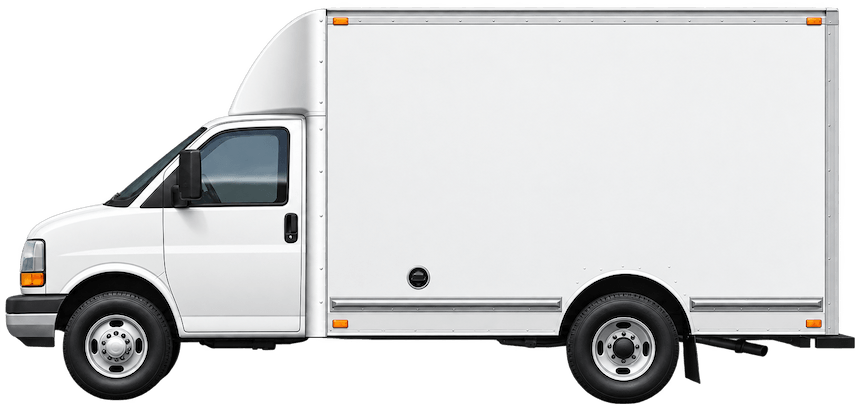
Box Trucks

EXPEDITED DELIVERY SOLUTIONS

What are Box Trucks?

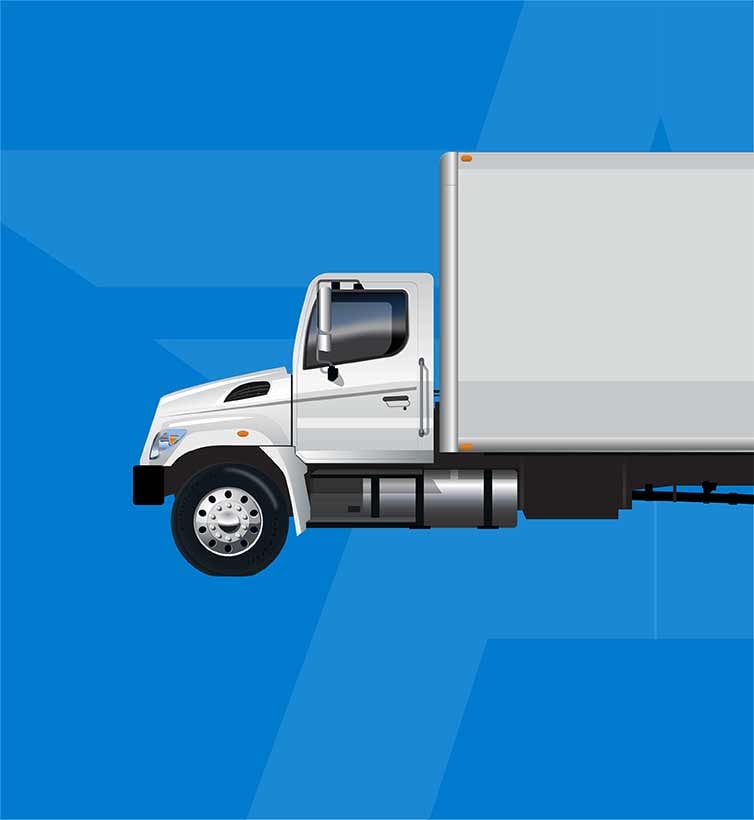
Box trucks fill the gap between cargo vans and full-size semi-trailers, making them a natural fit for urgent freight that needs more capacity without the size or complexity of a tractor-trailer. Also known as cube trucks, cube vans, or straight trucks, these vehicles pair an enclosed cargo body with the cab on a single chassis—no detachable trailer required.

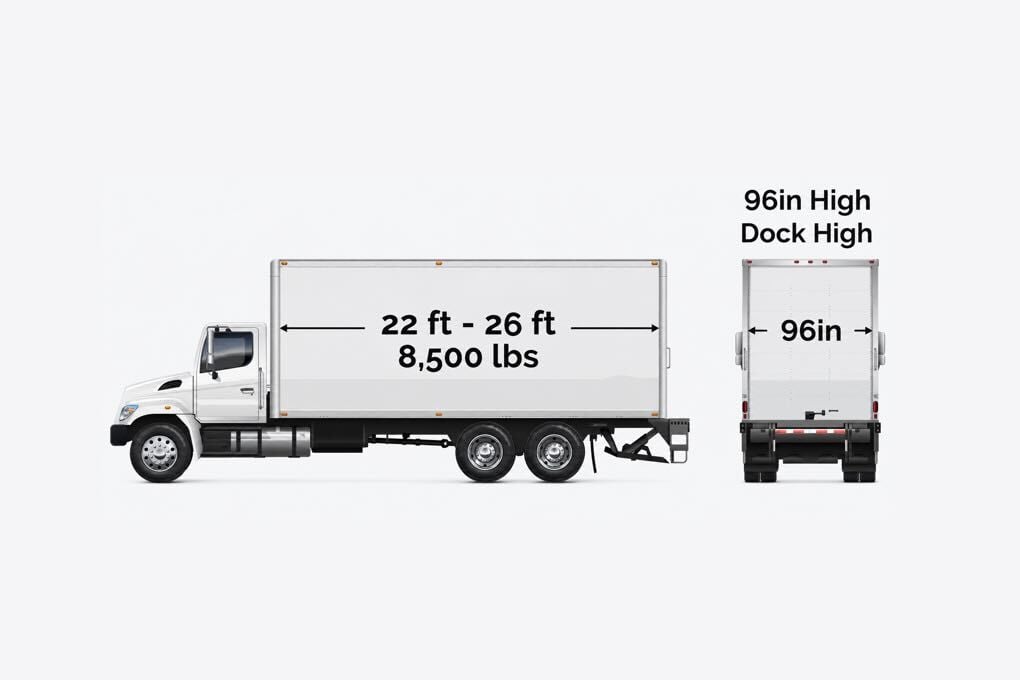
Box truck bodies typically range from about 10 to 26 feet long, with standard interiors close to eight feet wide. Smaller trucks can accommodate a handful of pallets, while larger models may handle roughly a dozen pallet positions when weight permits. Actual capacity varies by chassis, body configuration, interior height, payload rating, and door dimensions, so body length alone does not tell the whole story.

Where box trucks really stand out is at pickup and delivery. Larger models can back up to a standard loading dock and unload by forklift, while liftgate-equipped trucks can load or unload at locations without dock access. That flexibility is especially valuable for job sites, retail locations, construction projects, and busy plants where dock space may be limited. Roll-up rear doors add another advantage, allowing access in tight loading areas where swing doors may not have enough clearance.

ExpeditedFreight.com coordinates dedicated box truck capacity nationwide for time-critical shipments. Instead of moving through terminals or sharing space with other customers’ freight, your shipment travels on a dedicated truck that departs as soon as it’s loaded and drives directly to its destination. With no consolidation, transfers, or scheduled network stops, transit time is driven primarily by distance and available driver hours.

Request a Quote Now

Add your shipment details below, and one of our professional expeditors will contact you within minutes. For immediate assistance on an urgent quote, call (800) 704-7145 with these details handy.

Ground Transportation-1-1

Box trucks bridge the divide between small cargo carriers and bigger freight solutions.

Cargo-1

Cargo capacity up to 4 pallets, maximum payload 5,000 lbs.

Package tracking

Ideal for city navigation while also handling substantial payloads.

Hub to spoke

Cabover box trucks are particularly adept for navigating urban and suburban settings.

Box Truck Cargo Capacity

The limit is usually four standard pallets, although larger box trucks may be able to take eight. Alternatively, load these trucks up with totes, bins, cartons, and whatever other form of containers that need express delivery. Total interior volume is typically around 564 cubic feet, although some box trucks have additional storage space above the cab.

In terms of payload, most box trucks top out at 5,000 lbs, some models will take a little more.

Fuel efficiency varies depending on the model and load, but box trucks generally strike a balance between power and economy, making them a practical choice for short- to medium-haul expedited deliveries. Their boxy design maximizes interior space while keeping the vehicle compact enough to maneuver through tight streets and loading zones.

TYPES OF CARGO

These trucks are ideal for small quantities of things that need to be sent somewhere as fast as possible. They’re favored by industries from oil and gas production to aerospace and automotive for hot shot shipping of urgently needed items like tools, spares, and materials. Examples include:

Checkmark
Urgently needed replacement parts like pumps and motors (as when a machine or process is down)
Checkmark
Production materials or components, what’s often considered “Line down” freight where a factory is stopped or about to stop
Checkmark
Test, inspection, and measurement equipment too bulky or heavy for a Sprinter
Checkmark
Tooling being sent out for repair or being returned to the plant/site (another form of “Line down” freight)
Checkmark
Large or bulky spare parts
Checkmark
Engines, transmissions, anything similar that can be strapped to a pallet or cradle

ExpeditedFreight.com: Mid-Sized Freight Moving on an Urgent Timeline.

KEY BENEFITS

NATIONWIDE NETWORK
SINGLE POINT OF CONTACT
DEDICATED EXPERTISE
REAL-TIME TRACKING

Every hour spent locating a truck is an hour subtracted from the delivery window.

ExpeditedFreight.com works across a nationwide carrier network to find suitable enclosed capacity near the pickup, which shortens repositioning time and puts freight on the road sooner. Because that network covers the full box truck size range and includes liftgate-equipped units, an urgent shipment can be matched to a vehicle that fits both the load and the delivery conditions — rather than accepting whatever is closest and improvising at the destination.

EXPLORE OUR COVERAGE

ef-coverage-3

Range and Routes

Box trucks are ideal for moving expedited freight quickly across town, across state, or even across country. For longer journeys, a major advantage of box trucks over larger vehicles is their ability to pass under low bridges. That lets them use shorter, quicker routes, and the same goes for using roads with weight limits on them.

A box truck will typically go 250 – 350 miles between refueling stops. While they’re most often put to work on shorter journeys in metropolitan areas, they’re more than capable of making quick sprints across state when expedited trucking is what’s needed.

End to End Solutions

Box trucks offer significant advantages for businesses relying on expedited freight services, combining versatility, efficiency, and accessibility into a single solution. Their ability to navigate urban and suburban environments with ease ensures timely deliveries, even in congested areas where larger freight vehicles struggle. With capacities ranging from four to eight standard pallets—or ample room for totes, bins, and cartons—they provide flexibility to handle diverse cargo types, meeting the urgent needs of express shipping.

For businesses, this translates to faster service, reduced downtime, and cost-effective operations, all critical in maintaining a competitive edge in time-sensitive logistics.

Box trucks usually only require a standard driver’s license when GVWR is under 26,000 lbs. Some states or localities may have additional licensing, permitting, or operational requirements, particularly if the vehicle is being used for commercial purposes. Drivers should ensure compliance with all regulations.

KEY VEHICLE SPECIFICATIONS

Maximum cargo length

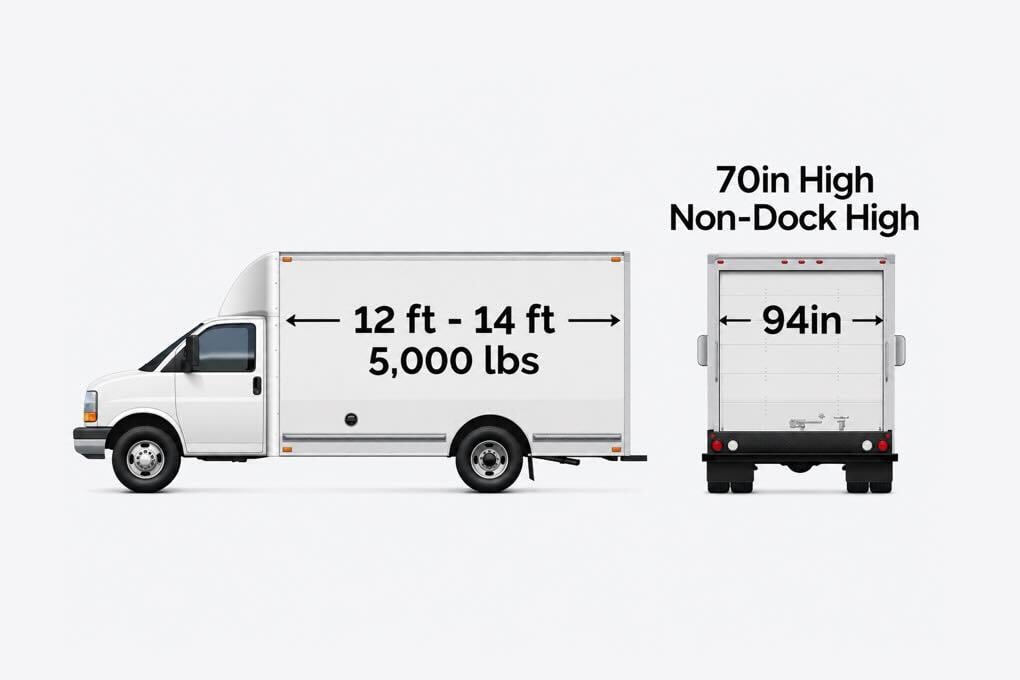
144 to 192” (12-16’) depending on the particular model

Maximum cargo dimensions

Width: 94”, height: 70”, length: 144 to 192”. (Models are available with additional cargo space over the cab.)

Payload limit

Around 5,000 lbs (some models will take more)

Loading

Floor is too low for a loading dock but a ramp simplifies manual loading. (Don’t try to drive a fork truck up the ramp and into a box truck though.)

Range

250 – 350 miles between refueling stops

REQUEST A QUOTE

Reach out today and let's solve your urgent shipping needs.

CONTACT US

Customer Reviews

5.0 / 5

551 Reviews

Trusted by Businesses Nationwide

See customer feedback about our service, communication, and expedited shipping support.

Rated by customers on Google

Your Time-Sensitive Cargo Needs a Dedicated Freight Team

Expedited Trucking

Box Truck Advantages

Box trucks deliver substantial benefits for expedited deliveries, thanks to their agility, compact build, and adaptability. The enclosed cargo space offers a safe, weather-resistant environment for valuable shipments throughout their journey.
Ground Transportation-1-1

Capabilities

Box trucks feature a boxy structure mounted on a sturdy chassis, providing ample payload capacity and generous interior room while remaining compact enough to handle urban roads. Their spacious design accommodates a variety of loads, including multiple pallets, drums, totes, or even wheeled carts and shelving. For those needing extra room, certain models offer additional cargo space above the cab.

Hub to spoke

Design

A growing number of box trucks are of the “cabover” design where the driver (and passengers(s)) sit above the engineThat reduces the overall length of the vehicleimproves visibilityand gives it an even tighter turning circleThis design makes cabover box trucks especially well-suited for urban and suburban environments, where tight streets and limited parking space are common challenges.

Cargo-1

Loading

Whether featuring a cabover layout or the traditional hood-forward style, box trucks strike a balance—agile enough for city streets and parking areas, yet spacious enough to haul substantial cargo. Equally dependable and efficient on highways as they are at sports venues or trade shows, they embody unmatched flexibility. This versatility positions box trucks as a top pick across diverse sectors, from logistics and delivery to mobile retail ventures.

Versatility

Versatility

Regardless of whether they sport a cabover setup or the conventional hood-forward look, box trucks offer agility for navigating city roads and parking spaces while still boasting the capacity to transport meaningful loads. They perform with equal reliability and utility on open highways as they do at stadiums or convention centers, potentially making them the pinnacle of adaptability. This all-purpose nature renders box trucks a go-to option for industries spanning courier services to temporary storefronts.

Regulations

Regulations

Similar to a Sprinter, box trucks generally don’t demand a commercial driver’s license for operation. A regular driver’s license typically suffices when the Gross Vehicle Weight Rating (GVWR) stays below 26,000 lbs. Despite their blocky shape, they also achieve decent fuel efficiency, helping to keep operational expenses in check. For those prioritizing a mix of speed, affordability, and dependability, Sprinter van service shines as an exceptional choice, guaranteeing that time-sensitive shipments arrive promptly and safely.

Efficiency

Advanced Tracking Technology

The box trucks used for our hot shot trucking services are fitted out with advanced tracking technology. This lets us see where the truck is, in real-time, at any moment of the day or night. Then, once we have that information, we can update the customer and advise the driver of any changes needed to avoid congestion or weather problems.

Industries That Rely on Box Trucks

oil-gas-1

Oil & Gas

Facilities and field operations order urgent supply in quantities exceeding what a van will hold. Expedited box trucks move crated compressor components, manifold sections, chemical totes, and instrumentation packages from supply bases to processing plants and field yards. Enclosed bodies protect control hardware across unpaved access roads, and liftgate service handles sites with no lifting equipment.

LEARN MORE

data center

Technology

Facility infrastructure fails at a different scale than server hardware does. Box truck delivery carries cooling unit components, power distribution equipment, cable tray, and staged hardware for site cutovers to data centers and corporate campuses. Liftgates matter here because many of these deliveries go to buildings never designed around a freight dock.
LEARN MORE

manufacturing-1

Automotive

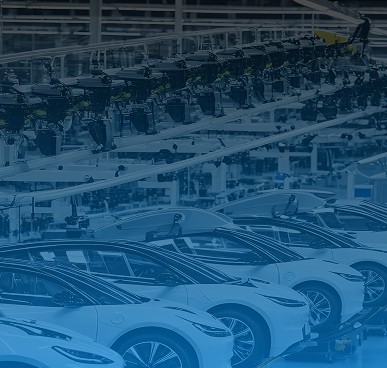
Plants running sequenced supply need volume that arrives complete. Expedited box trucks carry returnable dunnage racks, exhaust and suspension assemblies, instrument panels, adhesives and coatings, and replacement tooling from suppliers directly to assembly and sequencing operations. A shipment sized to a shift's production fits this equipment well, and dock-height units turn quickly at facilities built for trailer receiving.

Learn More

construction-1

Construction

Project schedules absorb small delays poorly and large ones not at all. Box trucks deliver replacement pumps and generators, temporary power equipment, mechanical assemblies, and packaged specialty materials to active sites. Liftgate capability is often decisive, since job sites frequently have no forklift available at the moment the truck arrives.

LEARN MORE

retail

Manufacturing

A stopped line drives immediate transportation decisions, and the fix is rarely small enough for a van. Expedited box truck freight moves conveyor sections, gearboxes and drive assemblies, palletized resin and raw stock, mixers, and packaging materials between suppliers and plants. Dedicated capacity keeps a recovery shipment from sitting in a consolidation terminal while production stays down.

LEARN MORE

aerospace

Aerospace & Defense

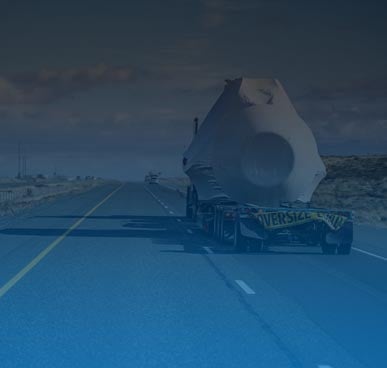
Program work generates freight that is bulky more often than heavy. Box trucks transport engine build-up components, tooling carts and fixtures, reusable shipping containers, calibration rigs, and crated assemblies between manufacturing sites, MRO facilities, and installations. Exclusive use keeps handling limited and supports the custody documentation that controlled shipments require.
LEARN MORE

Machinery

Machinery

Equipment service organizations lose billable days when parts arrive late. Expedited box trucks carry crated pumps, gear reducers, control cabinets, hydraulic power units, and replacement drive components to plants and repair shops. Weight per piece is often the governing factor on these loads, so liftgate ratings are confirmed alongside truck capacity before the shipment moves.
LEARN MORE

Mining

Mining

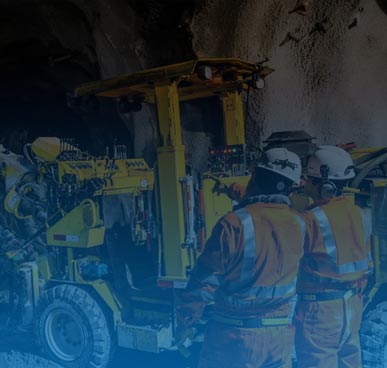
An unplanned failure at a remote operation is expensive in a way few industries match. Box truck freight delivers conveyor idlers, ventilation fans, electrical panels, drill steel, and pallets of wear parts to mine sites and processing plants, where the vehicle's shorter length handles site roads a full combination could not.

LEARN MORE

Telecommunications

Telecommunications

Outage restoration and construction milestones both generate urgent mid-sized freight. Expedited box trucks move equipment cabinets, microwave and antenna assemblies, battery strings, and spooled cable to central offices and tower sites. Liftgate delivery is close to essential here, since compounds and equipment shelters almost never include dock infrastructure.

LEARN MORE

Ground Transportation and Expedited Trucking Services

Our team of professionals works tirelessly behind the scenes to ensure every shipment arrives on time, and in optimal condition, at its final destination.
We offer the fastest ground and air transportation options for B2B customers across the United States, Mexico, and Canada.
We’re with you along every mile of your journey. Get peace of mind with a dedicated single point of contact.

The Right Capacity Is Key to Every Urgent Shipment

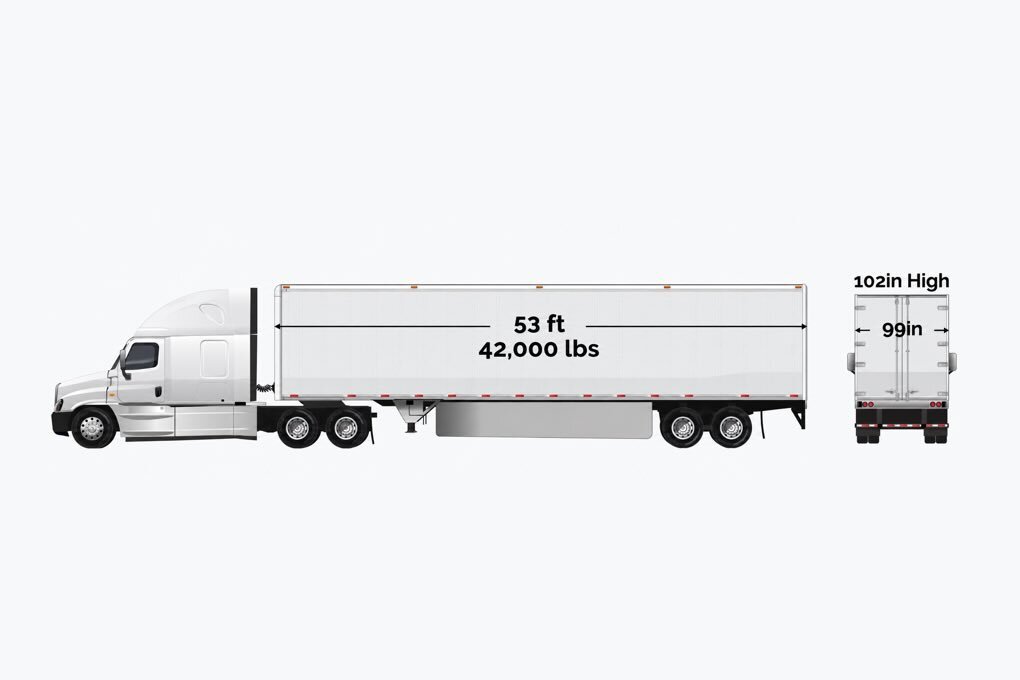
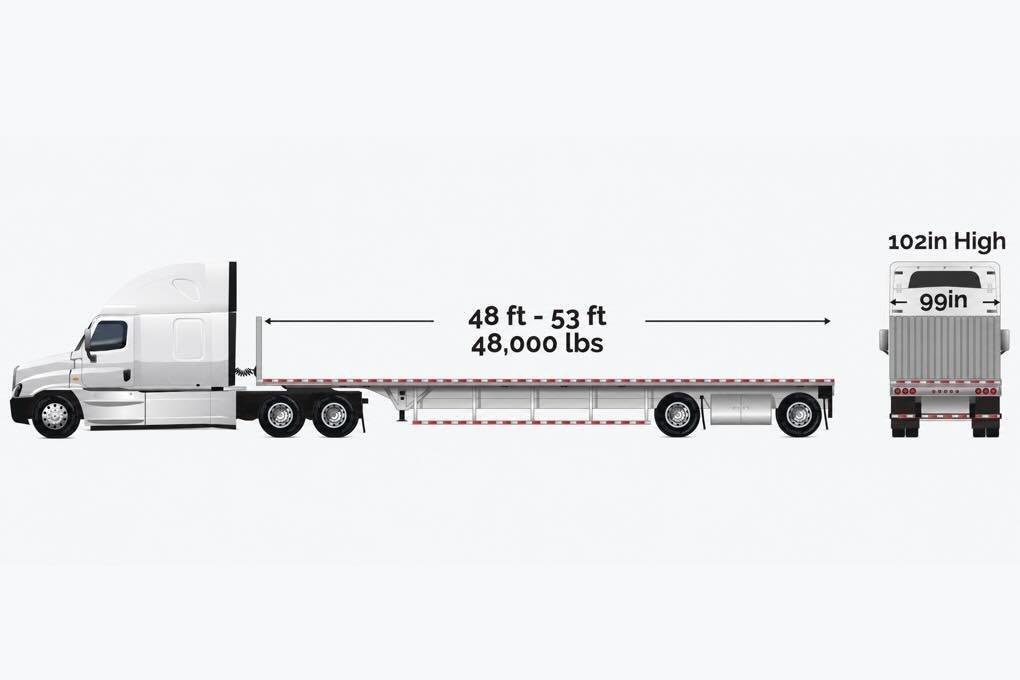
Your urgent shipment will be the only freight in the sprinter van, box truck, straight truck, hot shot truck, 53’ dry van, or full flatbed to minimize damage and ensure the shipment goes direct from pickup to delivery.

Frequently Asked Questions

What is a box truck?

A box truck carries its enclosed cargo compartment on the same frame as the cab, so vehicle and cargo area are one inseparable unit. Loading happens at the back, through either a roll-up or a swing door, and a side door is common for reaching part of the load without opening everything.

In freight terms, the box truck covers the range between a cargo van and a tractor-trailer. It handles several pallets of enclosed cargo, protects freight from weather and view, and can reach delivery locations that a 53-foot combination vehicle cannot approach. Body lengths, payload ratings, and interior heights vary widely across the category, so the specifications of an individual truck should be verified when a load is close to any limit.

What is expedited freight?

Expedited freight is transportation organized around a delivery deadline rather than around network efficiency. Capacity is sourced as quickly as it can be found, the vehicle carries one customer's shipment, and the freight travels directly to its destination without terminal handling or consolidation.

The service exists because standard freight networks are built for cost efficiency across many shippers, which necessarily means consolidation points, sorting, and scheduled departures. Expedited service removes those steps. Equipment ranges from cargo vans through tractor-trailers and is chosen to fit the freight, not the urgency. Transit time depends on distance, driver hours-of-service limits, and conditions along the route, so realistic timing is established per shipment rather than promised as a standard.

What is the difference between a box truck and a straight truck?

There is no meaningful technical distinction — a box truck is a straight truck. "Straight truck" refers to the chassis: cab and cargo body mounted on one continuous frame with no articulation. "Box truck" refers to the enclosed rectangular body on that frame.

Which word gets used is a matter of habit. In practice the smaller and mid-sized enclosed units get called box trucks, while the 24- to 26-foot vehicles that load at dock height are more often called straight trucks — but nothing separates them beyond convention. The terms genuinely diverge only when the body changes: put a flatbed or a stake body on the same chassis and it remains a straight truck while ceasing to be a box truck.

When should I use a box truck instead of a Sprinter van?

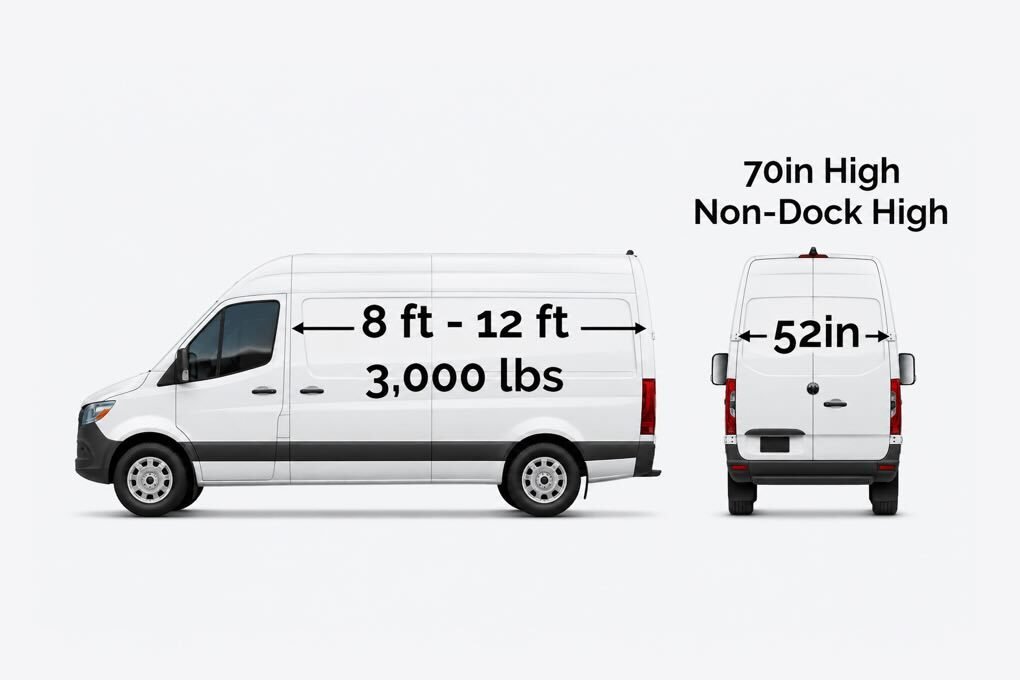
Move up to a box truck when the freight exceeds a van's limits or the site requires equipment a van does not have. The most common trigger is weight — vans in the Sprinter class carry payloads in the low thousands of pounds, and dense freight can exceed that while still looking small. Height is the second trigger, since a stacked pallet often will not clear a van's rear door opening.

Volume is the third — loads beyond roughly three pallets outgrow a van's cargo area. Handling is the fourth: if the freight needs a liftgate to reach the ground, a box truck fitted with one is the answer. Starting with the right size saves time, since discovering the mismatch at the dock means arranging a second vehicle under worse pressure.

What is the difference between box truck freight and LTL shipping?

Less-than-truckload shipping consolidates freight from many customers onto shared vehicles. Shipments travel to a terminal, get unloaded and sorted, continue on another trailer, and may repeat that cycle before delivery. The shared cost is what makes LTL affordable for small shipments, and the handling is what makes it slower and riskier.

An expedited box truck carries one customer's freight and nothing else. The load is picked up, driven directly to the destination, and unloaded — two handling events instead of six or eight. Transit is considerably faster and far more predictable, and damage exposure drops accordingly. LTL remains sensible for routine small freight where a few extra days cost nothing. Box truck service earns its premium when the delay would be expensive.

What is liftgate delivery?

Liftgate delivery uses a truck equipped with a hydraulic platform at the rear that lowers to ground level and raises freight to the cargo floor. It allows pickup and delivery at locations without a loading dock or forklift, which describes a large share of urgent delivery destinations.

Liftgates are optional equipment rather than standard, so the requirement must be identified when the shipment is booked. Each gate has capacity and platform-size limits that vary by model, and those limits apply per piece rather than to the load as a whole — a heavy single crate can exceed a gate's rating even when the total shipment weight is modest. Providing per-piece weights and dimensions at booking allows a truck with an adequate gate to be assigned.

How quickly can an expedited box truck be dispatched?

That depends on where the freight is and what equipment it needs, and it is the part of the process worth being honest about. The controlling factor is how far the nearest suitable truck has to travel to reach the pickup. In markets with dense capacity, that can be a matter of hours; in remote areas or for specific configurations such as a liftgate-equipped unit, it can take longer.

Time of day, day of the week, whether the origin can load immediately, and regional capacity all factor in. Rather than quoting a standard dispatch time, ExpeditedFreight.com checks actual availability for the origin and equipment and gives a realistic pickup estimate before the shipment is committed.

What size loads are best suited to a box truck?

The equipment fits shipments from roughly two or three pallets up to about a dozen, and weights ranging from a few thousand pounds into the low five figures depending on the truck's chassis class. Freight that is bulky but light and freight that is compact but dense both work, as long as one limit or the other is not exceeded.

Below that range, a cargo van is faster to source and cheaper to run. Above it, a 53-foot trailer carries the freight more economically, provided both ends have docks. The box truck's real advantage is not raw capacity but meaningful volume combined with the ability to deliver where a tractor-trailer cannot go — which is why it handles so much urban and job-site freight.

What is just-in-time delivery?

Just-in-time delivery is a supply strategy in which materials arrive at a production facility close to the moment they are needed rather than being held in inventory. It reduces the capital tied up in stock, the warehouse space required, and the risk of holding parts that become obsolete.

The trade-off is that JIT removes the buffer that would otherwise absorb a disruption. A supplier delay, a quality hold, or a transportation failure translates almost immediately into a production stoppage, because there is no reserve to draw on. That is why just-in-time operations are among the heaviest users of expedited freight. Box trucks in particular fit the profile, since JIT replenishment quantities frequently fall in the several-pallet range that this equipment handles well.

What is last-mile freight delivery?

Last-mile delivery is the final segment of a shipment's journey — the move from a local warehouse, terminal, or staging point to the address where the freight is actually used. It is typically the most complex and expensive portion, because it involves individual destinations, varied access conditions, and appointment constraints rather than efficient long-haul running.

In commercial freight, last-mile work often means delivering palletized goods to sites without docks: retail locations, construction projects, medical facilities, offices, and equipment installations. Box trucks with liftgates do much of this work, combining enough capacity for real freight with the maneuverability to reach constrained addresses and the means to unload without site infrastructure.

What is emergency freight service?

Emergency freight service is transportation arranged in response to an unplanned event — an equipment failure, a supplier miss, a damaged shipment, a weather disruption, or a quality hold that pulls inventory out of use. The defining characteristic is that the shipment was not planned and cannot wait for the next scheduled option.

Practically, that means capacity is sourced immediately, the vehicle is dedicated to the load, and routing goes directly to the destination. Emergency moves often involve non-standard conditions as well: loading after hours, delivering to a site rather than a warehouse, or coordinating with a crew already waiting on the freight. ExpeditedFreight.com handles these shipments individually rather than by template, since the constraints differ every time.

What is a refrigerated box truck?

A refrigerated box truck, sometimes called a reefer truck, is a straight truck whose cargo body is insulated and fitted with a mechanical cooling unit that maintains a set temperature range. It serves freight that would be damaged by ambient heat or cold — pharmaceuticals, certain chemicals and adhesives, laboratory materials, food products, and some industrial coatings.

Insulation reduces usable interior space and the refrigeration unit adds weight, so a refrigerated truck carries somewhat less than a dry box truck of the same length. Refrigerated units are a smaller share of available capacity, which affects how quickly one can be sourced for an urgent move. Temperature requirements should be specified precisely at booking, since holding a narrow range differs from simply keeping freight from freezing.

Can a box truck deliver the same day?

Yes, when the distance and the clock allow it. Same-day delivery requires that a truck can reach the pickup, load, drive to the destination, and unload within the receiving facility's operating hours — all inside one calendar day.

Distance is the primary constraint, and it interacts with everything else. A regional lane with an early pickup is usually straightforward. A longer run becomes marginal once repositioning time, loading, traffic, and delivery hours are added up, and at some point it stops being achievable regardless of urgency. Rather than treating same-day as a service level that either applies or does not, ExpeditedFreight.com evaluates the specific lane and timing and says plainly whether it is realistic before the load is committed.

What is point-to-point transportation?

Point-to-point transportation moves freight directly from a single origin to a single destination on one vehicle, with no intermediate stops, transfers, or terminal handling. The truck loads, drives, and unloads.

Contrast that with hub-and-spoke networks, where freight travels to a consolidation point, gets sorted with other shipments, moves to another hub, and continues onward. Hub routing is efficient at scale and is why standard freight costs what it does, but each transfer adds time and creates an opportunity for damage or misrouting. Point-to-point service trades that efficiency for speed, predictability, and reduced handling, which is the trade-off nearly every urgent shipment is willing to make.

What is hot shot trucking?

Hot shot trucking is on-demand freight service in which a vehicle is dispatched quickly for a single customer's load and driven directly to its destination. The term originated in oilfield supply work, where drivers with heavy-duty pickups rushed parts to drilling operations, and it now applies broadly across urgent freight.

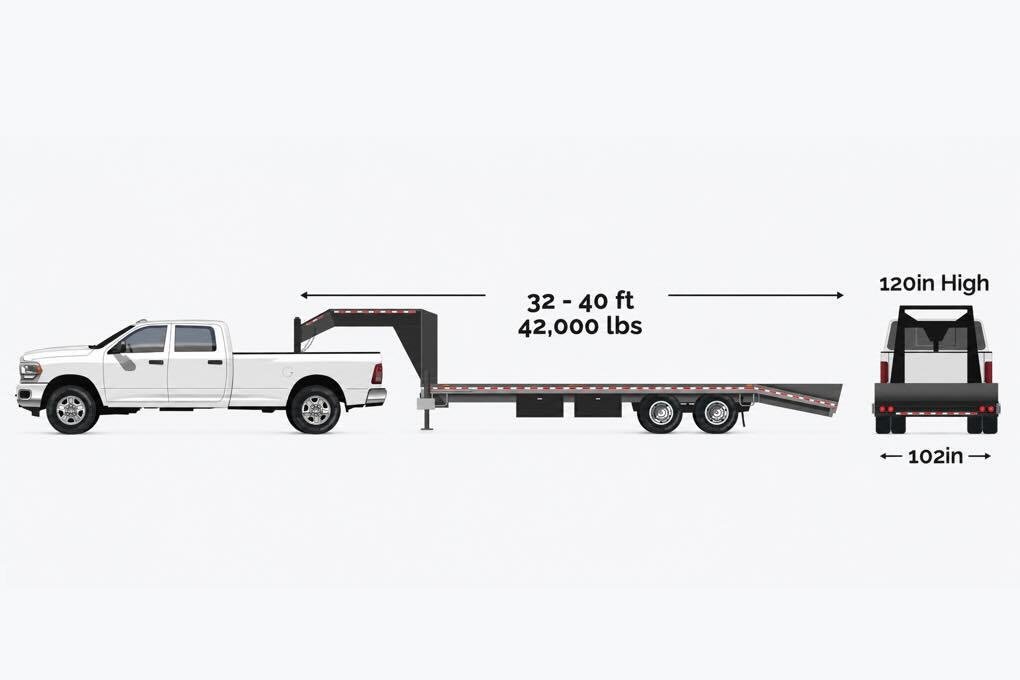
Hot shot loads are typically smaller than a full truckload, and the equipment varies with the freight: cargo vans, box trucks and straight trucks, gooseneck flatbeds behind pickups, and full-size trailers all appear in hot shot work. The distinction from general expedited freight is largely one of emphasis — hot shot implies a smaller load sourced on very short notice. In practice the two services overlap substantially, and many shipments could reasonably be described either way.

CTA Hero Star Background
TOP